
Eastern Europe, the Middle East and, in general, developing countries, are among the most common destinations. Underestimating issues relating to safety and the environment, perhaps believing that these areas have not yet developed a sensitivity to these issues comparable to that of other countries, can be an error of assessment that will be paid dearly. In fact, it happens that these initiatives are financed by big international development banks, such as IFC, World Bank, EBRD, ADB, which is generally referred to by the collective name of Lenders, or promoted by international companies extremely sensitive to these issues, which have developed very stringent rules of conduct relating to the environment, safety and relations with the local communities.
It can be safely said that one of their main objectives, is to obtain and maintain the consent of all interested parties, starting from the populations directly concerned, up to the audience of the administrators and politicians involved, passing through the local entrepreneurial fabric to finish to the local and international public opinion. Therefore, regardless of what legislation requires and how it is actually applied, a condition that varies according to particular local and national sensitivities, for the development banks the activation and continuous updating of an evaluation of the effects of the project, which starts from local environmental, ecological and social considerations, to extend to the more general consequences on the professional and economic communities, proportionate to the scale of the project, up to where the influence of the promoted activities can be extended.
You can read the whole article here: International building projects – HSE People

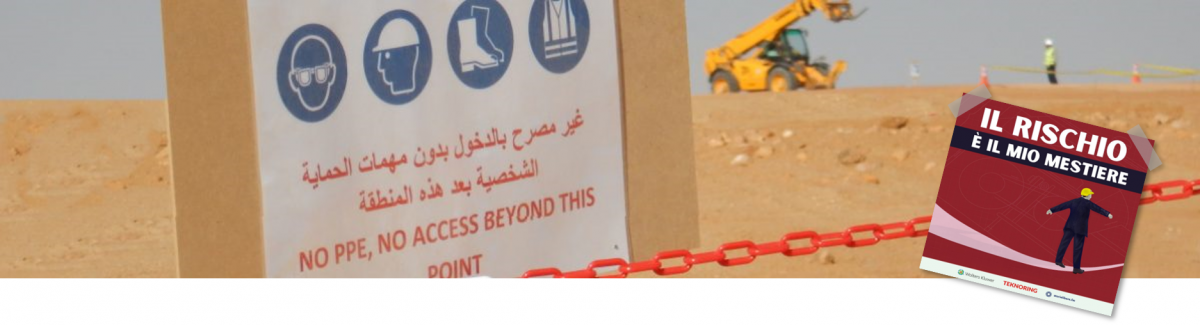
 No PPE, no access beyond this point