
One thing is easy to say: 2022 will not end the pandemic. Net of the possible variants, we will continue to perceive the consequences of COVID-19 for many years. In wealthier countries, infections and implications will decrease as the vaccine distribution progresses, but unfortunately, things will not go that way in the rest of the world. Even with the best intentions of international organizations and the most sensitive nations, it is unlikely that the process for the mass vaccination of all humanity, plus the need to repeat it after months, will eradicate the virus within the following year. Country closures, lockdowns and travel blocks will affect the world for some time yet. There will still be loss of life and turmoil in the economy, even more significant than what we are experiencing today. The consequences, however, will hit the poorest classes and countries the most worldwide.
To offset the economic consequences of the pandemic, the governments of the wealthiest countries and large international organizations are now setting up programs for the development of economies around the world, which will begin to manifest themselves in 2022. The counter-cyclical solution par excellence is the construction of new infrastructures, which are the basis for the development of commercial activities. We must therefore expect an increase in demand and circulation in the world of physical goods, from fuels to steel, but also of intangible ones, skills. Opportunities will open up both for established professionals, especially those who want to challenge themselves, and for young people who will enter the job market for the first time. The most competent and motivated ones will be those with the most opportunities.
The climate disruptions that we are all starting to notice, extreme unseasonal temperatures, weather phenomena that have never been seen in some geographic areas and the fact that this kind of news has entered the news mainstream are transforming these issues into ordinary conversation topics. The major international meetings, which until a few years ago were attended by environmental nerds and third-world activists, have become popular events such as Champions League finals or rock concerts. Sustainability has become accessible to everyone, who therefore pays those who can boast of it in popularity and visibility.
Large international organizations, multinationals, governments, and investment and development banks are beginning to perceive the possibility of obtaining a return from these issues. They are pushing for the concepts of corporate sustainability to expand from the top of large industries downwards along the whole supply chain. This is also influencing the definition of professional profiles: considering the environment in its extended meaning of what surrounds us, including air, water, land, natural resources, flora, fauna and humans and their relationships, has led to considering practical to integrate the management of health and safety at work and relations with interested parties into the skills of those involved in this discipline.
The new role of the ESHS manager, the acronym for Environmental, Social, Health and Safety, is being born, which sees the protection of health and safety as a part of environmental protection. It will replace those who deal “only” with HSE. To become suppliers or subcontractors of the international giants, which manage these rivers of money, a smaller company will have to adopt safer and more ecological working methods, certify its processes and be subject to controls by independent bodies appointed by the various levels of the client to which they respond: employer or main contractor. This will undeniably stimulate the preparation and updating of professionals and the competitiveness of companies, transforming itself into a factor of economic and social growth.
Are we on the eve of a new era of milk and honey? Will a new regenerated, sustainable, and supportive humanity emerge from the pandemic and climate crisis? Or will man not be able to ignore his legacy, the eternal homo homini lupus, man is the wolf of man? Maybe, sadly, is it just too late?
Well, one thing is for sure, we will not die of boredom.
Follow HSE People!

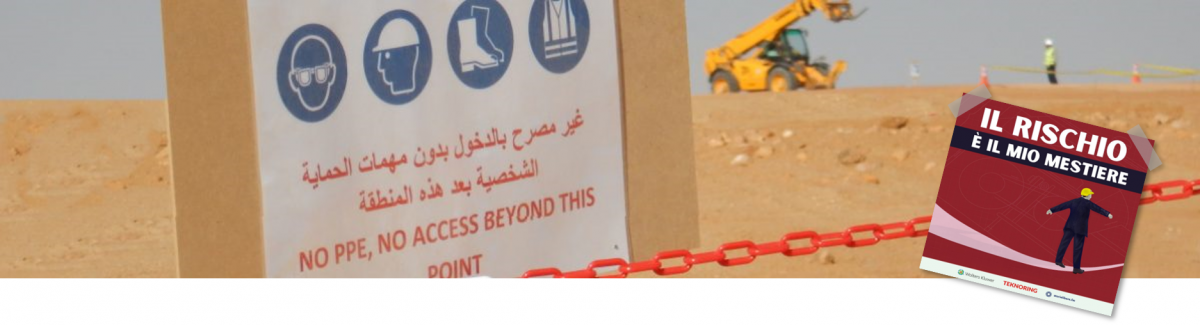
 No PPE, no access beyond this point