Categoria: Internazionale

HSE Manager Wolters Kluwer Italia: Comprendersi per capire | LinkedIn

E è bello segnalare questa iniziativa di European Agency for Safety and Health at Work (EU-OSHA) l’agenzia di informazione dell’Unione Europea nel campo della sicurezza e della salute sul lavoro, il thesaurus multilingue riguardante la terminologia in materia di sicurezza e salute sul lavoro, pubblicato a marzo 2021, che segue gli analoghi glossari relativi ai disturbi muscoloscheletrici e alle sostanze pericolose.
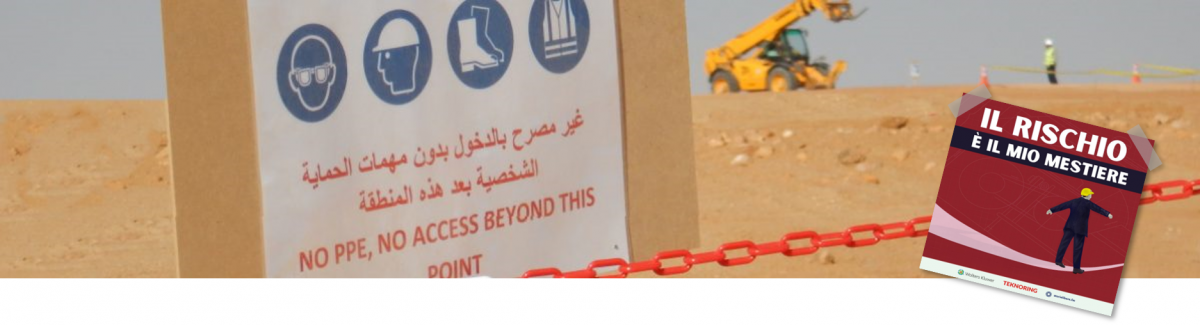
International building projects – HSE People

Eastern Europe, the Middle East and, in general, developing countries, are among the most common destinations. Underestimating issues relating to safety and the environment, perhaps believing that these areas have not yet developed a sensitivity to these issues comparable to that of other countries, can be an error of assessment that will be paid dearly. In fact, it happens that these initiatives are financed by big international development banks, such as IFC, World Bank, EBRD, ADB, which is generally referred to by the collective name of Lenders, or promoted by international companies extremely sensitive to these issues, which have developed very stringent rules of conduct relating to the environment, safety and relations with the local communities.
It can be safely said that one of their main objectives, is to obtain and maintain the consent of all interested parties, starting from the populations directly concerned, up to the audience of the administrators and politicians involved, passing through the local entrepreneurial fabric to finish to the local and international public opinion. Therefore, regardless of what legislation requires and how it is actually applied, a condition that varies according to particular local and national sensitivities, for the development banks the activation and continuous updating of an evaluation of the effects of the project, which starts from local environmental, ecological and social considerations, to extend to the more general consequences on the professional and economic communities, proportionate to the scale of the project, up to where the influence of the promoted activities can be extended.
You can read the whole article here: International building projects – HSE People
The Swiss Cheese Model of Pandemic Defense – The New York Times

Vi segnalo questa nuova variazione sul modello del formaggio svizzero di James T. Reason, pubblicata il dicembre scorso sul New York Times.
The cheese metaphor now pairs fairly well with the coronavirus pandemic. Ian M. Mackay, a virologist at the University of Queensland, in Brisbane, Australia, saw a smaller version on Twitter, but thought that it could do with more slices, more information. He created, with collaborators, the “Swiss Cheese Respiratory Pandemic Defense” and engaged his Twitter community, asking for feedback and putting the visualization through many iterations. “Community engagement is very high!” he said. Now circulating widely, the infographic has been translated into more than two dozen languages.
The Swiss Cheese Model of Pandemic Defense – The New York Times
YOL IŞLƏRI ÜÇÜN TƏHLÜKƏSIZLIK TÖVSIYƏLƏRI

Quando giro per cantieri mi piace fare brevi video e riprendere immagini delle situazioni che incontro. Questo mi rende possibile fare riferimento a casi reali quando, per un qualsiasi motivo, occorre discutere il modo in cui affrontare un lavoro. Mi è tornato ancora di più utile, negli ultimi tempi, utilizzare questo materiale per produrre brevi video, questo è un esempio, per gli interventi di formazione a distanza che la pandemia ha reso necessari. Naturalmente, qui non tutte le riprese e le fotografie sono le mie, ma sono comunque di pubblico dominio: troverete i riferimenti degli autori alla fine.
Corso di formazione: Nozioni ambientali di base per HSE Manager

Capita sempre più di frequente che ai Responsabili del Servizio Prevenzione e Protezione e ai Coordinatori per la Sicurezza vengano affidate mansioni legate alla gestione di temi ambientali, all’interno dell’azienda o del cantiere. Questo corso intende fornire a questi tecnici gli elementi base relativi agli obblighi e alle soluzioni da impiegare, all’interno di un inquadramento generale più ampio, relativo ai temi e ai movimenti culturali che stanno fungendo come stimolo per il settore.
Online il 24 giugno 2021, 8 ore.
Per informazioni, vai sul sito di AIAS Academy.
Nyt: “14 lezioni per affrontare la prossima pandemia” | L’HuffPost

L’Huffington Post ha pubblicato questo articolo, riprendendolo dal New York Times, dove un gruppo scelto di professionisti ed accademici hanno indicato, ciascuno, una lezione da apprendere dal COVID-19 per affrontare la prossima pandemia. Tutti i temi affrontati sono interessanti, e vi invito a leggere l’articolo, in originale se parlate inglese.
Tra tutte le proposte di riflessione, quella che mi ha colpito di più è la quattordicesima, sul guardarsi allo specchio:
″È difficile immaginare che ci siano così tante persone a cui non importa degli altri”, dice Reed Tuckson, co-fondatore di Black Coalition Against Covid-19. Tuckson invita a prestare maggiore attenzione al prossimo, rispettando le norme anti-contagio perché in gioco c’è la vita propria e altrui.
Leggi l’articolo dopo il link Nyt: “14 lezioni per affrontare la prossima pandemia” | L’HuffPost
HSE Manager Wolters Kluwer Italia: ILO Vision Zero Fund | LinkedIn
A febbraio l’ILO, International Labor Organization, ha organizzato un forum sul Vision Zero Fund, il programma per la riduzione delle morti e degli infortuni sul lavoro, attraverso la facilitazione dell’accesso alla catena di forniture globali dei paesi in via di sviluppo. L’idea è quella di promuovere progetti che possano generare competenze e fare acquisire conoscenze, in modo da accelerare lo sviluppo delle politiche di protezione del lavoratore a livello nazionale, regionale e globale. I progetti, sotto l’egida dell’agenzia per il lavoro delle Nazioni Unite, sono sponsorizzati da organizzazioni sovrannazionali e stati: sono della partita il G7, il G20, la Commissione Europea, Germania, Francia, Svezia, Norvegia, Regno Unito e Stati Uniti.
Leggi il post su: HSE Manager Wolters Kluwer Italia: ILO Vision Zero Fund
Safety, Environment and Construction Companies Abroad – HSE People

The market for the construction of large infrastructures, highways, dams, subways, is now completely globalized. The main contractors are multinationals, present in different geographical areas, and they employ personnel from every nation, at different levels. The same can be said for the service companies that gravitate in this market: designers, consultants and engineers belong to a large transnational community, so much so that it is not difficult, over the years, for these people to meet again for work in different parts of the world, in new projects and roles. Under the name. Working abroad, however, you can still find more different scenarios, situations that require a reasoned approach and quite different solutions, in terms of health and safety in the workplace.
All countries have specific sector regulations, which are more or less taken into consideration, depending on how strong the pressure of public opinion is towards the protection of workers and environment. They are often enforced even with draconian measures. The contractors that intend to approach these countries must have a very well-developed organization and technological skills and, in any case, in practice, they cannot help but adopt local practices, management and even local workers. It is no coincidence that the main players in the sector have acquired companies or established important branches in these areas.
Elsewhere, unfortunately the protection of the human life and the environment is not so strongly felt, both at the government level and in public opinion. In these countries, legislation and local social pressure cease to be of reference: a responsible company must find its guidance in internal practices, having as a deterrent the social pressure of public opinion in its own country. Some nations have developed extremely strict rules on the corporate responsibility, including about offenses committed abroad. As a rule, the following are punished:
- Extortion and corruption, undue inducement to give or promise benefits.
- Manslaughter and negligent injuries committed in violation of the rules on the protection of health and safety at work.
- Environmental crimes.
However, the situation also changes in these countries when dealing with projects financed by clients based in the most sensitive nations, or by international economic development banks, often identified under the collective name of Lenders. In this case it will be easy to face, often unexpectedly, the request for a remarkably high level of performance. We are living in a historical period in which great infrastructural works are sometimes viewed with suspicion: very frequently new roads, ports, railways, and infrastructures in general, are openly opposed and actively rejected by an often-noisy part of the population. In some countries it may happen that interventions by non-national capital or contractors can be interpreted as neo-colonial meddling by foreign powers, intent on reducing constituted states into economic dependence. Finally, there is always the possibility that the new infrastructure will be built in inhabited areas or characterized by particularly delicate ecosystems, causing opposition from local populations or public opinion, including international ones.
The international development banks, which are instruments of the foreign policy of the governments of the member states, have long since developed very sophisticated operational standards, which are incorporated into contracts and become the new references of construction companies, to avoid even the emergence of these problems as much as possible. These contractual requirements are frequently stricter than local mandatory legislation. Furthermore, owner companies from virtuous nations use to refer to these standards, even working outside their own country.
Basically, the areas of interest are three: environment, health and safety at work and relations with local communities and institutions. It is good to clarify: lenders pursue political objectives of maximizing consensus and minimizing negative effects, and the funded project is not their ultimate goal, but only the tool for these objectives. Thinking that, like an ordinary owner, they are exclusively interested in the realization of the project, and that for this reason they can have a negotiable approach to everything else, can lead to a rude awakening.
You can read the whole article here: Safety, Environment and Construction Companies Abroad – HSE People
La storia delle cinture di sicurezza

Lo sapevate che la prima casa automobilistica ad offrire come dotazione standard le cinture di sicurezza è stata la svedese SAAB, nel 1958? Anche se la loro ingegnerizzazione la si deve alla società di distribuzione dell’energia elettrica svedese Vattenfall, nel 1956, in conseguenza di uno studio sulle cause degli incidenti occorsi ai suoi lavoratori, che vedevano quelli alla guida di veicoli aziendali come principale causa di morte.
A questo link potete leggere questa storia.
 No PPE, no access beyond this point