La particolarità del sistema legale britannico è tale da considerare le persone giuridiche capaci di commettere crimini allo stesso modo delle persone fisiche, per cui, nel passato, si sono verificati casi di organizzazioni indagate per Corporate Manslaughter. Uno degli esempi di scuola è il caso dell’Herald of Free Enterprise, il traghetto the affondò all’uscita del porto di Zeebrugge in Belgio, nel marzo del 1987, uccidendo 193 persone tra passeggeri ed equipaggio, anche se il processo si concluse con un verdetto di assoluzione.
Il Corporate Manslaughter and Corporate Homicide Act, una legge che ha innovato il concetto di omicidio colposo commesso da una organizzazione nella giurisprudenza britannica, è stata approvata nel 2007 per avere, tra i vari motivi, uno strumento più adeguato per sanzionare questi crimini quando sono commessi nell’ambito di grandi organizzazioni, dal momento che i tecnicismi delle norme in vigore fino ad allora, avevano mostrato qualche limite, fondamentalmente nella necessità di individuare una persona fisica responsabile della condotta criminale, per potere punire l’organizzazione.
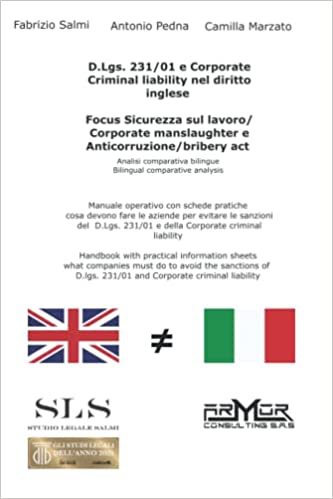
Puoi approfondire acquistando il volume D.Lgs. 231/01 e Corporate Criminal liability nel diritto inglese: Focus Sicurezza sul lavoro/Corporate manslaughter e Anticorruzione/bribary act scritto assieme a Fabrizio Salmi e Camilla Marzato.
Il documento “Foresight Study on the Circular Economy and its effects on Occupational Safety and Health”, “Studio di previsione sull’economia circolare e i suoi effetti sulla sicurezza e la salute sul lavoro” è un interessante pezzo a cavallo tra science fiction e manifesto politico. Gli scenari individuati per il 2040 variano da una età green del latte e del miele (The roaring 40s – fully circular and inclusive), alla descrizione di varie distopie, alcune più inquietanti delle altre.
One thing is easy to say: 2022 will not end the pandemic. Net of the possible variants, we will continue to perceive the consequences of COVID-19 for many years. In wealthier countries, infections and implications will decrease as the vaccine distribution progresses, but unfortunately, things will not go that way in the rest of the world. Even with the best intentions of international organizations and the most sensitive nations, it is unlikely that the process for the mass vaccination of all humanity, plus the need to repeat it after months, will eradicate the virus within the following year. Country closures, lockdowns and travel blocks will affect the world for some time yet. There will still be loss of life and turmoil in the economy, even more significant than what we are experiencing today. The consequences, however, will hit the poorest classes and countries the most worldwide.
To offset the economic consequences of the pandemic, the governments of the wealthiest countries and large international organizations are now setting up programs for the development of economies around the world, which will begin to manifest themselves in 2022. The counter-cyclical solution par excellence is the construction of new infrastructures, which are the basis for the development of commercial activities. We must therefore expect an increase in demand and circulation in the world of physical goods, from fuels to steel, but also of intangible ones, skills. Opportunities will open up both for established professionals, especially those who want to challenge themselves, and for young people who will enter the job market for the first time. The most competent and motivated ones will be those with the most opportunities.
The climate disruptions that we are all starting to notice, extreme unseasonal temperatures, weather phenomena that have never been seen in some geographic areas and the fact that this kind of news has entered the news mainstream are transforming these issues into ordinary conversation topics. The major international meetings, which until a few years ago were attended by environmental nerds and third-world activists, have become popular events such as Champions League finals or rock concerts. Sustainability has become accessible to everyone, who therefore pays those who can boast of it in popularity and visibility.
Large international organizations, multinationals, governments, and investment and development banks are beginning to perceive the possibility of obtaining a return from these issues. They are pushing for the concepts of corporate sustainability to expand from the top of large industries downwards along the whole supply chain. This is also influencing the definition of professional profiles: considering the environment in its extended meaning of what surrounds us, including air, water, land, natural resources, flora, fauna and humans and their relationships, has led to considering practical to integrate the management of health and safety at work and relations with interested parties into the skills of those involved in this discipline.
The new role of the ESHS manager, the acronym for Environmental, Social, Health and Safety, is being born, which sees the protection of health and safety as a part of environmental protection. It will replace those who deal “only” with HSE. To become suppliers or subcontractors of the international giants, which manage these rivers of money, a smaller company will have to adopt safer and more ecological working methods, certify its processes and be subject to controls by independent bodies appointed by the various levels of the client to which they respond: employer or main contractor. This will undeniably stimulate the preparation and updating of professionals and the competitiveness of companies, transforming itself into a factor of economic and social growth.
Are we on the eve of a new era of milk and honey? Will a new regenerated, sustainable, and supportive humanity emerge from the pandemic and climate crisis? Or will man not be able to ignore his legacy, the eternal homo homini lupus, man is the wolf of man? Maybe, sadly, is it just too late?
Well, one thing is for sure, we will not die of boredom.
Environmentalists are disappointed, and they’re not wrong. We need more efforts to tackle global warming, but these will have a major impact on our lives. The complaints about the price increases of gas and other strategic raw materials, which we hear and utter these days, are nothing compared to what we will to go through, and no one is going to radically change their lifestyle.
This is the same in developing countries, China, India, but also Brazil, where we have just begun to glimpse the consolidated level of economic (and political) well-being that is taken for granted in Europe, no one is going to be pushed back to the situation of ten or just five years ago. A house built of concrete and bricks, with a floor that is not of clay court, electricity and running water, even if drinking water does not come out of the taps in most of the world, the first refrigerator, the first means of personal transport, these are not things that are easily renounced once they are known.
How to do? This policy of small steps, to be constantly monitored, with objectives to be reviewed on a frequent basis, is probably the only way to proceed. But it is up to the more industrialized countries to lead the path, and to work out alternatives that are feasible to developing ones. History tells us, becayse we are the ones who started to pollute, and we have neglected the consequences. It is imposed on us by the way we want to be seen and the way we want to be considered by other peoples.
Un aspetto del capitalismo finanziario si sta dimostrando un potenziale stimolo per il miglioramento della tutela della salute, della sicurezza e dell’ambiente. Gli investitori professionali, specialmente quelli dei mercati internazionali, sono particolarmente sensibili alla reputazione delle aziende e sembrano guardare con maggiore interesse quelle organizzazioni che si mostrano attraenti ai consumatori e alla politica, perché riescono a comunicare il loro atteggiamento positivo nei confronti di questi aspetti. La cronaca continua a riportare notizie di cattive condotte nei confronti dei lavoratori e dell’ambiente, ma è un fatto che l’opinione pubblica, specialmente nei paesi più industrializzati e quella dei gruppi di pressione internazionali, ha abbassato il livello di tolleranza per questi eventi.
Nell’aprile del 2021 la Commissione Europea ha proposto al Parlamento e al Consiglio Europeo di rivedere le modalità con le quali alle organizzazioni economiche è richiesto di rendere disponibili quelle che in passato erano definite “informazioni non finanziarie” e che, negli anni, sono diventate le comunicazioni societarie sulla sostenibilità.
Il motivo è semplice: la crisi pandemica e climatica stanno imponendo un cambio di passo. Non è più sufficiente parlare di salute, di sicurezza o di ambiente: occorre allargare lo sguardo e lavorare per fare in modo che le nostre organizzazioni diventino sostenibili e resilienti.
Il principale obiettivo della COP26 è di spingere i paesi a presentare piani per azzerare le emissioni nette a livello globale entro il 2050, incoraggiare i paesi colpiti dei cambiamenti climatici a proteggere e recuperare gli ecosistemi e a costruire sistemi per la segnalazione la protezione dagli eventi climatici estremi.
Fate programmi? Meglio se prima leggete questo articolo di Bloomberg, la multinazionale dell’informazione con sede a New York e filiali in tutto il mondo. Dei circa 16 miliardi di dollari che si stima il valore dell’informazione finanziaria nel mondo, Bloomberg ne gestisce un terzo. Una fonte che deve essere bene informata, quindi.
Secondo Bloomberg, la pandemia non è ancora terminata, e dobbiamo prepararci a nuove ondate in autunno e inverno. La fine potrà esserci solo quando chiunque sarà stato contagiato o vaccinato. E a qualcuno potranno capitare anche entrambi gli eventi.
Deming ci ha insegnato che, per ottenere e mantenere i risultati, occorre porsi costantemente obiettivi da superare, per poterne raggiungere altri, più sfidanti.
Qualification and working knowledge are essential components, much like the ingredients in a cocktail. For instance, consider James Bond’s favourite drink, the Martini cocktail, which he prefers “shaken, not stirred.” Separating the gin from the vermouth is impossible.
Qualification and working knowledge combine to create a unique flavour containing elements of both. In the real world, our experiences are only sometimes neatly separated. Instead, our ingredients often intermingle, forcing us to adapt and learn quickly when facing unexpected challenges. To prepare for professional challenges, we must plan our training accordingly.
What sets an iconic cocktail apart and makes a technician a competent professional? It’s all about controlling the main ingredients and adding secondary ones in the proper proportions. A good Martini cocktail, for example, requires lemon zest, green olives without pits, ice, and careful presentation. Drinking a Martini cocktail from a beer mug would be a terrible idea!
If you have extraordinary professionalism, you could be a Vesper Martini, the first cocktail James Bond ordered in Ian Fleming’s 1953 book, Casino Royale. IIt is named after the seductive double agent, Vesper Lynd, played by two beautiful women: Ursula Andress in the 1967 movie and Eva Green in the 2006 remake. A Vesper Martini comprises gin, vodka, and Kina Lillet, a French liqueur made with wines from the Bordeaux region and macerated liqueurs. Unfortunately, it is no longer produced.
What do I mean by this bold alcoholic-cinematic metaphor? What do Ursula Andress and Eva Green have more than many other beautiful women? The word is personality. Experience and skills are only helpful if you can rework them to produce something new and yours. And how is this achieved? Testing yourself every day. Trying to improve and finding your weaknesses to work on.
Do you think Eva Green (and Ursula Andress, in her day) left home in the morning as they woke up? Maybe now, yes. But they can afford it because they have worked on themselves for years. They worked on how to introduce themselves, how to walk, how to look, how to smile, how to talk, how to drink a glass of champagne, how to shake hands… They learned to wear make-up, dress, pose, model, and act. They tested themselves because they wanted to improve themselves.
There it is. A good professional must certainly have qualifications and working knowledge. But they are both things you can buy, more or less cheaply. A good professional has a personality. He tackles work to serve his client and the people around him and improve himself. He chooses professional challenges to become a better person. He can develop skills and experiences by producing something new.
Because, after all, you only live twice, and twice is the only way to live!