
ISO – International Organization for Standardization, ha recentemente pubblicato la linea guida ISO/PAS 45005/2020 dal titolo Occupational health and #safety management — General guidelines for safe working during the COVID-19 pandemic.
Leggi il post su: HSE Manager Wolters Kluwer Italia – Pandemia: nuova linea guida internazionale
Categoria: ISO 45001
Lo standard internazionale per i sistemi di gestione di salute e sicurezza sul lavoro
Come gestire la sicurezza di appaltatori e subappaltatori in azienda? – Teknoring

Come gestire la sicurezza di appaltatori e subappaltatori in azienda?
Leggi l’articolo Come gestire la sicurezza di appaltatori e subappaltatori in azienda? su Teknoring.com
La decisione di una organizzazione di fare entrare altre aziende all’interno della propria, per eseguire servizi esternalizzando processi di business propri, ha delle conseguenze in relazione agli obblighi e alle responsabilità per la tutela della sicurezza dei lavoratori. Questi sono richiamati dal Testo Unico su Salute e Sicurezza, all’articolo 26 Obblighi connessi ai contratti d’appalto, d’opera o di somministrazione.
Webinar: ISO/TS 24179:2020 Human resource management — Occupational health and safety metrics

Pubblicata la registrazione del webinar di martedì 2 febbraio 2021
Nel luglio scorso, l’ISO (International Organization for Standardization) ha rilasciato lo standard ISO/TS 24179:2020 “Human resource management — Occupational health and safety metrics”, “Gestione delle risorse umane – Metriche di salute e sicurezza sul lavoro”. Il nuovo standard definisce le formule per il reporting interno ed esterno per ottenere misure comparabili per il monitoraggio e la misurazione delle prestazioni relative alla salute, sicurezza e benessere dell’organizzazione. La norma enfatizza le questioni che devono essere considerate nell’interpretazione dei dati, in particolare quando si specificano azioni o misure correttive o per affrontare opportunità e quando si comunicano a stakeholder interni (come lavoratori e partner) o esterni (come investitori e autorità di regolamentazione).
I criteri dei sistemi di gestione applicati al coordinamento della sicurezza

Come gestire un cantiere definendo un processo di misurazione e monitoraggio, a integrazione e supporto di quello definito dalla norma come responsabilità del coordinatore per l’esecuzione? Per fare questo la sequenza può essere:
- definire cosa misurare, che naturalmente deve corrispondere o essere pertinente ai requisiti definiti dalla norma e agli obiettivi che ci si era dati in fase di redazione del PSC;
- determinare come eseguire il monitoraggio e le misurazioni, nonché come svolgere il confronto con gli obiettivi; in pratica le tecniche di misurazioni e monitoraggio, attraverso le quali si ottiene un numero che definisce la prestazione;
- stabilire quali saranno i criteri di valutazione;
- stabilire quando eseguire monitoraggio e misurazioni, questo in rapporto a come si sviluppano i processi all’interno dei quali occorre eseguire la misurazione;
- determinare quanto eseguire, valutare e comunicare i risultati, importante, in funzione a come si è deciso di articolare il processo della comunicazione, di cui al requisito 7.4, tenendo naturalmente conto dei requisiti stabiliti dalla legge, nel nostro caso, dall’art. 92. c. 1 lett. e).

Misurazione e monitoraggio implicano che gli strumenti per le registrazioni che siamo abituati a vedere utilizzate nei cantieri, più simili ad elaborati resoconti notarili, con tanto di invocazione apotropaica alla fine (il contenuto di questo verbale costituisce aggiornamento del piano di sicurezza e coordinamento), che a vere e proprie check list cambino il loro aspetto, predisponendosi per ospitare numeri (misurazioni) o, più appropriatamente, risultati del monitoraggio (conforme, non conforme).

La definizione di cosa misurare o assoggettare a monitoraggio è la questione strategica da affrontare per prima: è consigliabile che le categorie siano sufficientemente ampie da consentire l’aggregazione dei risultati, ma non generiche da non poterne distinguere il contenuto. Tanto per estremizzare, una sola voce generale riferita alle condizioni del cantiere (soddisfacente/non soddisfacente) probabilmente non consente di entrare nel dettaglio delle possibili deviazioni. Ma anche una checklist ultra-specialistica (sono state ruotate in direzione verticale le copiglie alle estremità dei vermi?) è utile solo se il nostro ambito è, appunto, talmente particolareggiato. Se l’obiettivo è quello di verificare come vengono implementate le prescrizioni del PSC si può partire dal contenuto che la norma definisce per questo, come, ad esempio, esemplata sul contenuto del D.Lgs. 81/2008, All. XV punti 2.2.1, 2.2.2, 2.2.3 e 2.2.4.
Leggi l’articolo I numeri del coordinatore sul numero 1/2021 di Igiene & Sicurezza del Lavoro di Wolters Kluwer.

ISO 45001: valutare le prestazioni

La ISO definisce il termine prestazioni come i «risultati misurabili»; anche questo è un termine definito a livello di HLS, lo standard che la ISO si è data per armonizzare i propri sistemi di gestione. In sostanza, la valutazione delle prestazioni può essere intesa come quel processo in cui si confrontano gli obiettivi che il SSL si è dato all’inizio del ciclo PDCA con i risultati effettivamente raggiunti. Monitoraggio, invece, significa «determinazione dello stato di un sistema, di un processo o di un’attività», e implica un giudizio su di esso: positivo, negativo, migliore, peggiore… Misurazione, infine è definito come quel «processo per determinare un valore», e implica la determinazione di un valore numerico. Questo significa che il nostro processo, secondo il requisito 9.1, ha il fine di determinare sia gli stati che i valori, da confrontare con i riferimenti. Per fare questo, l’organizzazione deve:
- definire cosa misurare, che naturalmente deve corrispondere o essere pertinente agli obiettivi che ci si era dati in fase di pianificazione;
- determinare come eseguire il monitoraggio e le misurazioni, nonché come svolgere il confronto con gli obiettivi; in pratica le tecniche di misurazioni e monitoraggio, attraverso le quali si ottiene un numero che definisce la prestazione, dovranno fare sì che questo sia coerente col numero che definisce l’obiettivo;
- stabilire quali saranno i criteri di valutazione;
- stabilire quando eseguire monitoraggio e misurazioni, questo in rapporto a come si sviluppano i processi all’interno dei quali occorre eseguire la misurazione;
- determinare quanto eseguire, valutare e comunicare i risultati, importante, in funzione a come si è deciso di articolare il processo della comunicazione, di cui al requisito 7.4.
Leggi il seguito sul numero 2 del 2021 di Ambiente & Sicurezza.
The fish rots from the head down – HSE People

Fish, according to popular wisdom, always rots from the head down. Consequently, regulations and standards insist on the involvement of top management in all business dynamics related to safety. Undoubtedly, top management defines the entire company policy, and therefore also that of safety. It establishes plans and programs for the future development of the organization, and it allocates resources. Making the long story short, top management makes the choices for the company’s strategy, in that never ending war which is the conquest of the market. Safety is just one of its various aspects; its relevance within the overall strategy of the organization can derive, for example, from the necessity to comply with the laws. However, this is the minimum degree; this kind of attitude will quickly present major limitations. For some divine curse, in fact, the law identifies the minimum expected behaviour to obtain a result, however, which is always the maximum: the complete protection of the psychophysical integrity of the worker. It is like a paradox of ancient Greek philosophy, whereby it is possible to reach the goal only when you decide to overcome it, which means that full compliance with the requirements of the standard can only be achieved by considering having to go beyond those.
When planning a goal of this kind, there is no need to be frightened by ethical considerations: there are markets in which the safety of workers and the protection of the environment are held in high regard, and companies that fail to take care of them cannot enter or have a short life. These are all those in which organizations are exposed to the action of large pressure groups, which may be such because they are made up of numerous subjects, such as consumer associations, or because they have great capacity for action, such as banks. For companies that decide to compete in these markets, complying with the law is only a starting point, because they know that their ability to do business will be greatly affected by the reputation they will be able to earn.
Once the management of an organization has defined the extent and objectives of its effort, whether it should limit itself to just obtaining compliance with legal standards, clearly for fear of the punishments that may be incurred, or whether it wants to go further, perhaps to access more profitable markets, it will have to adopt strategies to maximize the economical return. In this situation, we are led to focus on the technical and regulatory aspect, neglecting that the tendency of human groups to adapt to the messages and concrete behaviours of leaders, is an aspect that techno-geeks lead to underestimate. All this within any kind of organization, no matter how extensive, because the same dynamics present in any social sphere apply. A health, safety, and environment plan should therefore assign some resources to these issues, defining a communication strategy that has in the company management and in other leadership roles, such as elderly workers with respected experience, or young technicians of recognized competence, its own active testimonials.
The goal of an HSE communication strategy is undoubtedly to reinforce the importance of this aspect, in the eyes of all members of the community-organization, and it is pursued:
- Adopting widespread behaviours of compliance with the rules.
- Giving open support to those who respect them and to those who are committed to their control.
- Recalling anyone who does not respect these rules, in a constant and irrelevant way of the role they occupy in the organization.
Informal behaviours of peers and superiors have a great influence on the perception of how health, safety and environmental protection are taken into consideration in the workplace: in small and less structured companies, the management is close to production activities, so it must be directly involved in these tasks. In the more structured ones, it will be appropriate to plan public initiatives, to make explicit the support of the management.
These can be, for example, periodic inspections conducted by top management in the production areas, together with the safety manager and the department managers, to be able to promptly intervene on the conditions encountered, naturally respecting the rules in force, such as the use of PPE, the smoking ban, respect for transit and safety areas… These inspections should be conducted with a frequency such as to avoid any kind of preventive staging, so to show the working conditions as they actually are every day and to ensure the workers on the sincerity of the objectives.
To obtain the maximum result, it is advisable to implement a communication campaign: a program, and resources, for at least one year, will avoid the counterproductive effects due to the silent renunciation of any initiative, because no plan was made. The elements of the campaign may concern, for example:
- Incentive campaigns for the virtuous behaviour of workers, with bonuses paid directly to them or – better – money sums set aside by the company for social objectives, agreed with the workers themselves or their representatives.
- Periodic campaigns on issues relating to safety and the environment, perhaps with objectives related to work, such as cleaning an area, the maintenance of a machine.
- Bulletin board and poster communications.
- Meetings and, why not, parties.
You can read the whole article here: The fish rots from the head down – HSE People
HSE Manager Wolters Kluwer Italia: Numeri e indagini | LinkedIn
Quando capita un incidente, le buone pratiche vogliono che le sue cause vengano analizzate per fare in modo che non si ripeta.
A volte si ha un approccio delicato alle indagini sugli infortuni, per “non cercare un capro espiatorio”, ma così si finisce per svolgere un esercizio inutile. È ovvio che una organizzazione sana non è alla ricerca di una persona da incolpare e, probabilmente, il fatto che questo timore blocchi l’inchiesta, è un segno che l’ambiente aziendale non è proprio così disteso come si crede o che non esiste una buona cultura della sicurezza.
Leggi il post su HSE Manager Wolters Kluwer Italia: Numeri e indagini
No PPE, no access beyond this point – i cinque post più letti del 2020

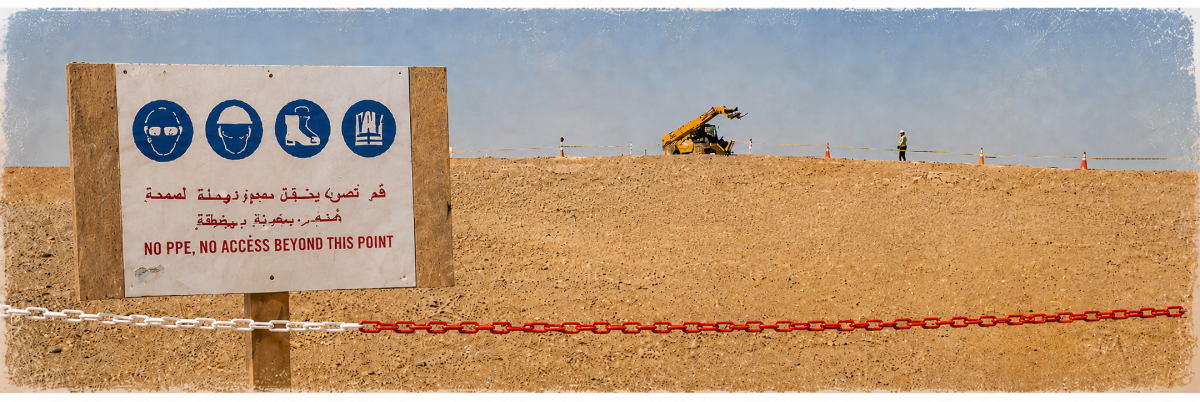
Durante il lockdown del 2020 ho deciso di realizzare questo blog, dove scrivo dei temi che affronto nella vita professionale e raccolgo le pubblicazioni che faccio sulle riviste, cartacee e online, del settore. Qualcuno mi ha chiesto da dove viene la fotografia che uso come banner, e che dà il titolo al blog, No PPE, no access beyond this point. È stata scattata nel deserto egiziano, nei pressi di Aswan, dove mi trovavo per fare un audit al Benban Solar Park Project, il più grande parco fotovoltaico in Egitto, in costruzione. Mi è sembrata subito una scena buffa: da una parte il deserto, dall’altra il deserto, in mezzo una catenella di plastica su due picchetti, e quel cartello…
Bene, questo blog sta avendo una buona riuscita, mi serve per aumentare le interazioni con i miei colleghi e con i potenziali clienti, e sto raggiungendo il mio obiettivo. Come auspicio per un buon, 2021 vorrei riepilogare qui i cinque post che sono stati più letti nel 2020:
Al quinto posto c’è Il vortice PDCA, un articolo che nasce dall’idea che i sistemi di gestione possano essere fortemente integrati nelle attività delle organizzazioni, tanto che i loro concetti fondamentali (il ciclo PDCA, appunto) diventino il consueto modus operandi per tutti i processi.
Al quarto posto un articolo di contenuto politico: Italia, Giappone e COVID-19 – numeri al confronto. Come tecnico, e con un lontano retaggio da sportivo agonistico, guardo ai numeri per valutare la riuscita o l’insuccesso delle cose. La pandemia ha chiesto all’Italia il pagamento di un pedaggio straziante: al 31 dicembre 2020 74.159 italiani erano ufficialmente morti a causa del COVID-19, una prestazione che ci mette al quarto posto mondiale della triste classifica dei decessi. L’Italia (60 milioni di abitanti), è superata dagli USA (328 milioni), Brasile (209 milioni), India (1 miliardo e 353 milioni) e Messico (126 milioni). Nella classifica di morti ogni 100k abitanti siamo terzi al mondo, con un punteggio di 119,5. Peggio di noi hanno fatto solo la Slovenia (124,8) e il Belgio (166,7).
Con questi numeri io non credo che il principale problema siano i criteri di come sono registrati i decessi, o la possibile attitudine di alcuni governi di addomesticare i numeri. Se fossi ancora uno sportivo mi chiederei cosa fanno gli altri meglio di me per copiare i loro metodi di allenamento. Come tecnico cercherei di individuare le mie debolezze e analizzerei le buone prassi altrui. Come cittadino non posso accettare il sopire e troncare come fondamento dell’azione politica.
Al terzo posto l’articolo ISO 45001 requisito 8: attività operative. L’ottava puntata della serie che sto scrivendo da un po’, dove analizzo punto per punto il più recente standard sui sistemi di gestione per la salute e la sicurezza.
Il secondo posto è occupato da Gestione del rischio e genesi dell’errore umano nel metodo di Reason. Il lavoro di tanti precursori, tra i più conosciuti è W.E. Deming, qui parlo di James Reason, è ai fondamenti della nostra professione ma è poco conosciuto, almeno al livello dei “praticanti”. Qui ho solo iniziato il lavoro di scavo che mi propongo di continuare nel 2021.
Al primo posto ancora un articolo di carattere politico: Chi ci governa non si è mai occupato di salute e sicurezza negli ambienti di lavoro!, dove non mi lamento – come qualcuno ha pensato, fermandosi solo al titolo – della trascuratezza dei nostri governanti riguardo alla sicurezza sul lavoro. La mia analisi, piuttosto, riguarda i fallimenti dei nostri amministratori nel predisporre le misure di mitigazione per il contagio da SARS-CoV-2 al rientro dalle attività estive. Senza dubbio, ci sono state lacune nella loro programmazione e nella loro implementazione, problemi che sono familiari a chi si occupa di salute e sicurezza negli ambienti di lavoro e che i bravi tecnici e i manager competenti hanno imparato a prevedere, riconoscere e mitigare.
Comunque, ringrazio i miei lettori da trentacinque nazioni – da A di Albania a Z di Zimbabwe – diversi dei quali stanno mostrando il loro apprezzamento, visitando il sito con regolarità. Un risultato che mi soddisfa, per appena qualche mese di attività, e auguro loro un felice e prospero 2021.
ISO 45001 requisito 7 – le risorse per il sistema di gestione della sicurezza

Nella foto: Settembre 2013, i lavori di ampliamento sotto traffico della galleria Montedomini sull’Autostrada A14.
La decisione di intraprendere il percorso di costruire o modificare i propri processi di business in relazione ai requisiti dello standard ISO 45001, se non addirittura di puntare alla certificazione del sistema di gestione per la salute e la sicurezza, è una questione che può impegnare anche in maniera rilevante il presente ed il futuro prossimo delle organizzazioni che affrontano questo passo. Una valutazione delle risorse da utilizzare per la costruzione e per garantire il funzionamento del sistema di gestione è doverosa, soprattutto perché il pericolo è quello di lanciarsi in un’avventura senza avere la concreta possibilità di raggiungere gli obiettivi che ci si pone. Il capitolo 7.1 Risorse dello standard definisce i requisiti da rispettare, intese come le persone dedicate al sistema di gestione, ma anche infrastrutture (locali, attrezzature, mezzi di trasporto), in termini abbastanza generici, sufficienti però ad indirizzare l’analisi su quello che efficacemente contribuisce al successo del sistema di gestione. Alcune di queste specifiche, in particolare quelle relative alla competenza delle risorse strategiche per le prestazioni del SSL, vengono approfondite dai capitoli successivi.
Quali risorse
Occorre però considerare che l’accesso alle risorse più appropriate, potrà influenzare non solo il modo in cui il sistema di gestione sarà amministrato, ma anche e soprattutto come esso sarà progettato e determinati i suoi obiettivi. Nei sistemi di gestione costruiti secondo L’High Level Structure – il modello per questi standard elaborato dall’ISO – l’analisi del contesto dell’organizzazione definita dal capitolo 4, con le due specifiche relative alla comprensione dell’organizzazione e del suo contesto e alla comprensione delle esigenze e delle aspettative dei lavoratori e di altre parti interessate, è il momento in cui vengono definiti gli obiettivi, individuati i mezzi necessari e vengono analizzati quelli in possesso dell’organizzazione stessa. Onde evitare di eseguire analisi superficiali, che inevitabilmente impedirà di ottimizzare gli obiettivi, costruendo un sistema di gestione lontano dall’ottimizzazione dei processi, sarebbe opportuno assicurarsi il supporto di una persona esperta, esterna all’organizzazione per il supporto a queste attività. L’assenza del coinvolgimento nelle dinamiche interne dell’organizzazione, nonché l’attribuzione di un incarico ben definito e limitato al supporto per la progettazione del sistema di gestione, dovrebbero essere la garanzia di un punto di vista distaccato ed imparziale, e perciò funzionale agli obiettivi dello standard.
Leggi l’articolo ISO 45001: impossibile senza risorse adeguate sul numero 11/2020 di Ambiente & Sicurezza.

Gestione del rischio e genesi dell’errore umano nel metodo di Reason – Teknoring
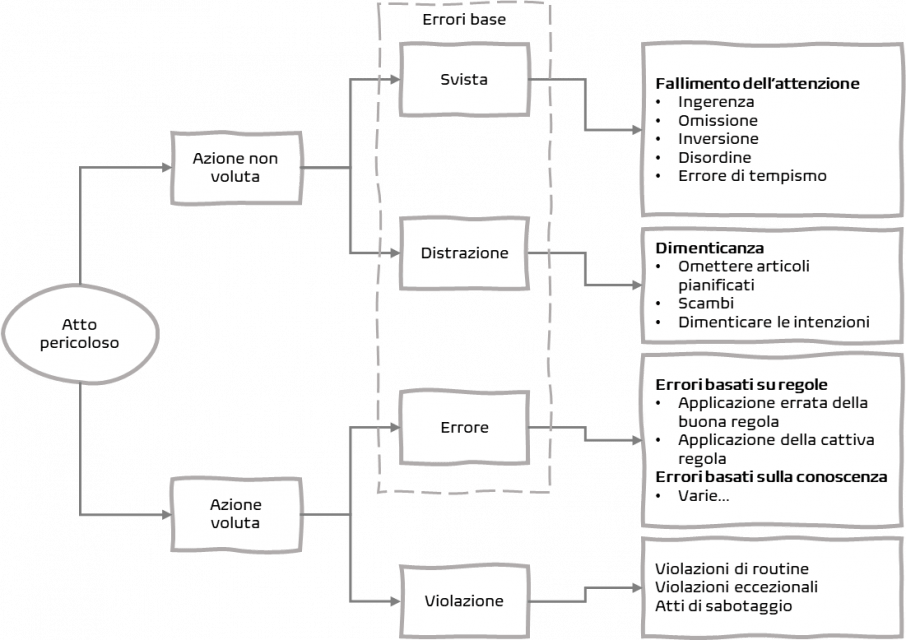
L’atto pericoloso, dice Reason, può essere voluto o non voluto. Gli atti involontari possono essere classificati in sviste, distrazioni o errori, a seconda di come si è generata la deviazione. È una svista quando si scambia un’azione per un’altra, evidentemente per un deficit dell’attenzione. Quante volte siamo usciti di casa prendendo il mazzo di chiavi sbagliate, ad esempio? O abbiamo preso l’attrezzo sbagliato dal bancone, fidandoci della memoria della sua posizione? Si tratta di una dimenticanza, invece, quando, letteralmente, dimentichiamo uno o più passi di un particolare procedimento. O, magari, quando, a metà del lavoro ci rendiamo conto di avere perso di vista l’obiettivo con cui avevamo iniziato.
Leggi l’articolo Gestione del rischio e genesi dell’errore umano nel metodo di Reason su Teknoring

